
We Record You Talking
Discovery interviews, transcribed in full. The phrases you reach for, the jokes you make, the order you tell things in: that is the raw material.
- Interviews by video or phone
- Full transcripts kept
- Your own words as source
Home/Book Writing
Ghostwriting Studio · Tasman PublishersFor Australian and New Zealand authors: most people who want to write a book have the material and not the time. Our writers do the drafting, you do the deciding, and nothing goes in that you have not signed off. Your name, your rights, your royalties.
This is what ghostwriting actually looks like. Pick a genre to see the brief, the author's raw notes, and the draft that came back.
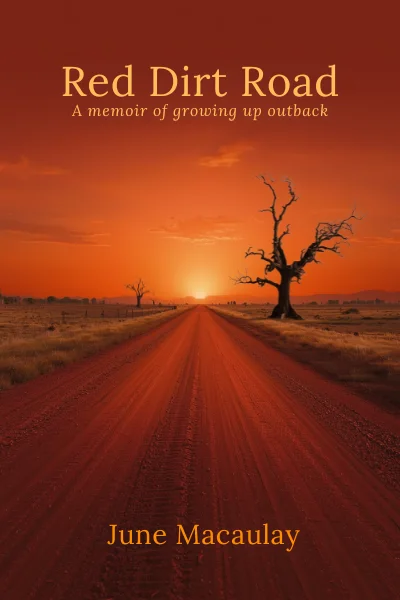
June Macaulay · Ghostwritten from interviews
ok so chapter one should start with the day I left. I was nineteen. Mum didn’t come out to the gate, which still gets me. Dad drove me to the bus at Cobar, February, stinking hot, one suitcase and his old thermos. Red dirt for forty k before the bitumen. Nobody said much. He gave me twenty dollars at the bus and I’m pretty sure he cried but he’d never admit that. Don’t make it sad, just true.
The road out of town was red dirt for forty kilometres, and I knew every corrugation of it by heart.
Dad drove. I sat with the case on my knees and Mum’s silence still in my ears, because she had not come out to the gate. It was February. The air through the window was the temperature of a held breath, and the thermos between us was the one he had carried to every shearing shed in the district.
At Cobar he pulled up behind the bus and left the engine running. He gave me twenty dollars, folded twice, the way he gave money to anyone he loved.
‘Ring your mother Sunday,’ he said.
He did not look at me, and I understood that he was crying, and that we were both going to spend the next forty years pretending he was not.
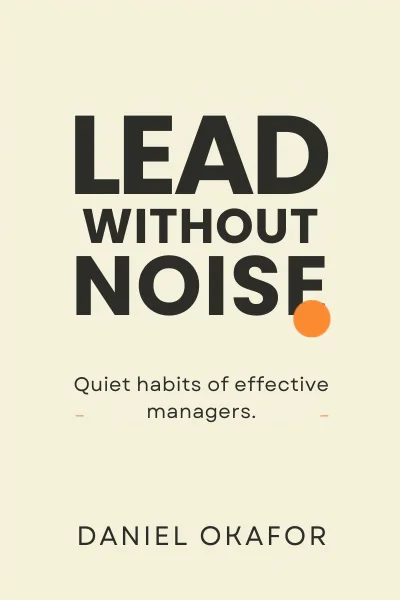
Daniel Okafor · Ghostwritten from workshop recordings
in the workshops I always tell the Thursday story. A team I coached cancelled every internal meeting for a week. Everyone panicked, thought the wheels would fall off, and then they shipped the thing they’d been putting off for two months. Point is interruptions cost way more than the interruption itself. Keep it practical, no jargon, and land on the three habits at the end.
A few years ago, a team I was coaching cancelled every internal meeting for a week.
Nobody was comfortable with it. Two of the managers told me privately that the wheels would come off. What actually happened was quieter than that: people arrived, worked, and went home, and on the Thursday they shipped a piece of work that had been sitting half-finished for two months.
The lesson was not that meetings are evil. Plenty of them earn their place. The lesson was that the cost of an interruption is never the interruption. It is the twenty minutes on the other side of it, when somebody is trying to find their way back into work they had only just got into.
Calm teams are not less busy. They are more deliberate about when they are available.
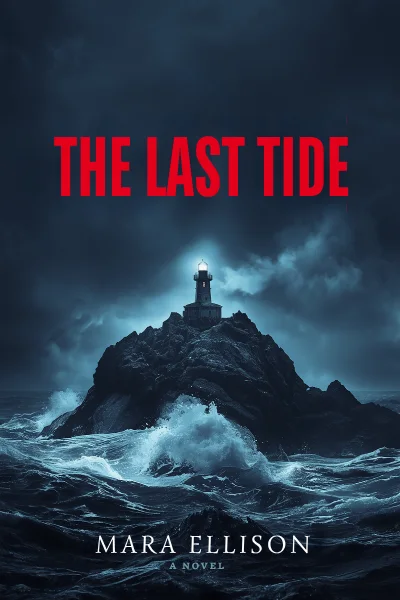
Mara Ellison · Co-written from scene notes
scene: Nora hears knocking at about two in the morning, takes the torch down the cliff path in the storm, finds a man on the rocks holding a letter in a plastic sleeve. Don’t reveal whose name is on the envelope until the very last line. I want it to feel cold and wet and a bit claustrophobic. She’s been out there eleven winters so none of it should surprise her except this.
She did not know the sound she heard at a quarter past two.
It came once, and then again: a hollow knocking from the landing at the foot of the cliff, where no boat had tied up since the pier collapsed. Eleven winters on the point had taught her every noise the tower could make. This was not one of them.
She took the torch and her father’s coat and went down the path with the rain coming at her sideways.
The beam found the water first, black and heaving, and then the shape on the rocks that she took, for one long second, to be a seal.
It was not a seal. It was a man, and he was holding a letter sealed in plastic, and the name on the envelope was her sister’s.
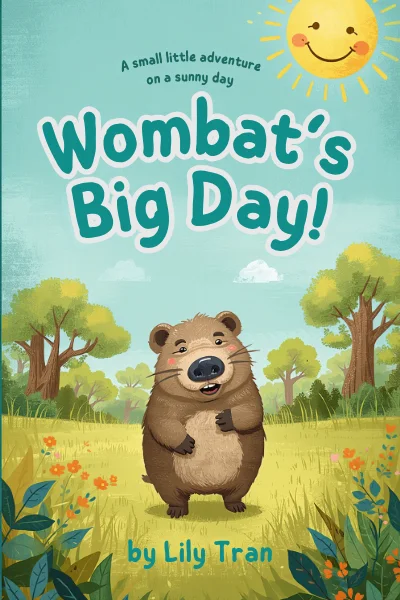
Lily Tran · Written from a one-page idea
story idea: Wombat has a big plan to cross the creek and get to the best grass on the other side. He keeps getting distracted by friends along the way, ends up in a muddy puddle, and decides the puddle is better than the grass anyway. Funny, not preachy. I’d love a line that repeats: “a VERY big plan”.
Spread 1Wombat woke up early.
Today was going to be a VERY big day.
Spread 2He had a plan.
A very, very big plan.
Spread 3“Where are you going?” asked Echidna.
“Across the creek,” said Wombat. “The grass is better there.”
Spread 4“Better than here?” said Echidna.
Wombat did not stop to answer.
He had a VERY big plan.
Spread 5Then came the puddle.
It was brown. It was deep.
It was perfect.
Priya Nair · Ghostwritten from coaching notes
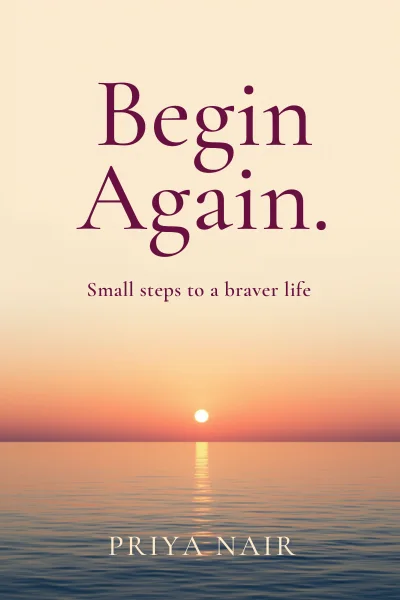
please don’t make it sound like a motivational poster. Maybe start with the kettle story from my coaching notes: the client whose whole fresh start was making a cup of tea before she looked at her phone. She kept it up for a year when nothing else had stuck. The book is about steps small enough to survive a bad week.
Her fresh start was a kettle.
She had tried the big versions before: the gym membership in January, the app that woke her at five, the notebook with the first four pages filled in. None of them lasted past a bad week, and there is always a bad week.
So she picked something smaller than her own resistance. Every morning, she made a cup of tea and drank it before she looked at her phone. That was the whole plan. It took nine minutes.
A year later, it was the only thing she had never stopped doing, and it had quietly changed the shape of every morning that followed.
That is the method of this book. Pick something so small that it survives a bad week, and let it carry the rest.
Sample briefs, notes and prose written for fictional books to show how the process works. The authors and titles are not real.
A ghostwritten book only works if readers who know you recognise you in it. That takes method, not guesswork.
Discovery interviews, transcribed in full. The phrases you reach for, the jokes you make, the order you tell things in: that is the raw material.
Sentence length, formality, humour, how much you swear, what you would never say. Written down, so every chapter matches the last.
One chapter first, so you can say "that's me" or "I'd never say that" before the whole book is written in the wrong voice.
Whether you are starting with nothing or stuck at forty thousand words, there is a way in.
We write the book from your interviews and material. Your name on the cover, ours nowhere.
You write some, we write some, and one of us holds the voice steady across the whole book.
You have thirty thousand words and no ending. We finish it in the voice you already set.
The document agents and publishers actually read: hook, market, chapters and sample pages.
For a life story you can tell but do not want to type. We interview, transcribe and write.
Dates, places and details checked, so a reader never stops trusting the book halfway through.
We act strictly as your writing production partner. Your manuscript is your intellectual property from the first interview.
Typical finished lengths by category. We agree your target in the outline.
Four stages, each one signed off by you before the next begins.
Recorded interviews about the book, the reader and the story you want to tell, transcribed in full.
A chapter-by-chapter plan and one written chapter, so the shape and the voice are agreed early.
Chapters written and sent to you as they are finished, with your notes folded into the next pass.
A full revision pass, then the finished manuscript handed to you, ready for editing and publication.
The things authors want settled before they hand over their story.
Yours, completely. You hold the copyright from day one, your name is the only name on the cover and spine, and you keep one hundred per cent of the royalties. We claim no byline and no share of revenue.
Yes. Every engagement is covered by a legally binding NDA before any manuscript material is shared, and your writer works under the same agreement.
With recorded discovery interviews. We listen to how you actually tell the story, build a style sheet from your own phrasing, and write a sample chapter for you to react to before the full draft begins.
That is common. We can finish a partial manuscript, rewrite chapters that are not working, or edit and shape what you already have rather than starting again.
It depends on the category. A business or self-help book usually runs 35,000 to 50,000 words, memoir 60,000 to 80,000, and a novel 70,000 to 100,000. We agree a target length in the outline.
Yes, at every stage. You approve the outline chapter by chapter before drafting starts, and nothing goes into the book that you have not signed off.
Tell us what the book is about and what you have so far. The first call costs nothing and is covered by an NDA.
Work with an Adelaide-based author services team today.