
Independent Publishing
Full creative control and the larger share of the revenue, with our production team doing the heavy lifting behind you.
- You keep copyright and royalties
- Every production stage in one place
- Fastest route to a finished book
Home/Book Publishing
Publishing Studio · Tasman PublishersFor Australian and New Zealand authors: editing, cover design, typesetting, ebook and audio production, ISBNs, and distribution to the stores and libraries where readers already shop. One team, one named contact, and you keep your copyright and royalties.
This is what "published" actually means: a cover, a typeset interior, the editions readers can buy, and the launch assets that go with them. Pick a project to see the whole thing.
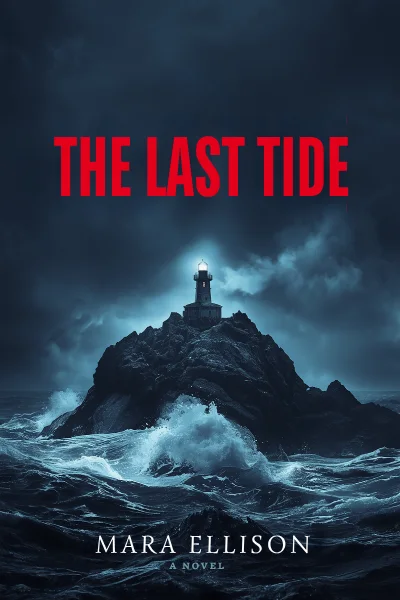
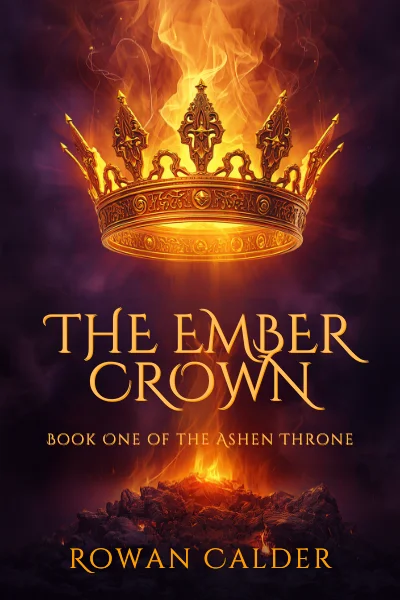
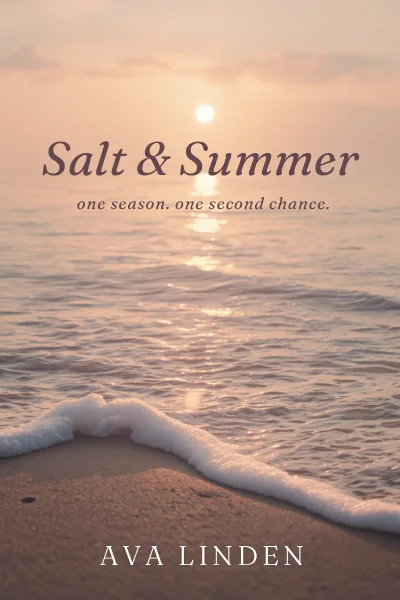
by Mara Ellison
A debut thriller, published in print, ebook and audio, with a launch campaign across AU and NZ.
The Keeper
The storm reached Cape Mercy an hour before the ferry was due, and by nightfall there was no ferry, no radio and no road back to the mainland.
Nora Vail had kept the light on the point for eleven winters. She knew the sounds the tower made when the wind came round from the south: the low complaint of the stairwell, the tick of the old lamp housing, the long breath of the sea against the rocks below.
She did not know the sound she heard at a quarter past two. It came once, then again—a hollow knocking from the landing at the foot of the cliff, where no boat had tied up since the pier collapsed.
She took the torch and her father’s coat and went down the path with the rain coming at her sideways.
The beam found the water first, black and heaving, and then the shape on the rocks that she took, for one long second, to be a seal. It was not a seal. It was a man, and he was holding a letter sealed in plastic, and the name on the envelope was her sister’s. Nora had not said that name aloud in twenty years.
1
Set for print and re-flowed for ebook. See formatting
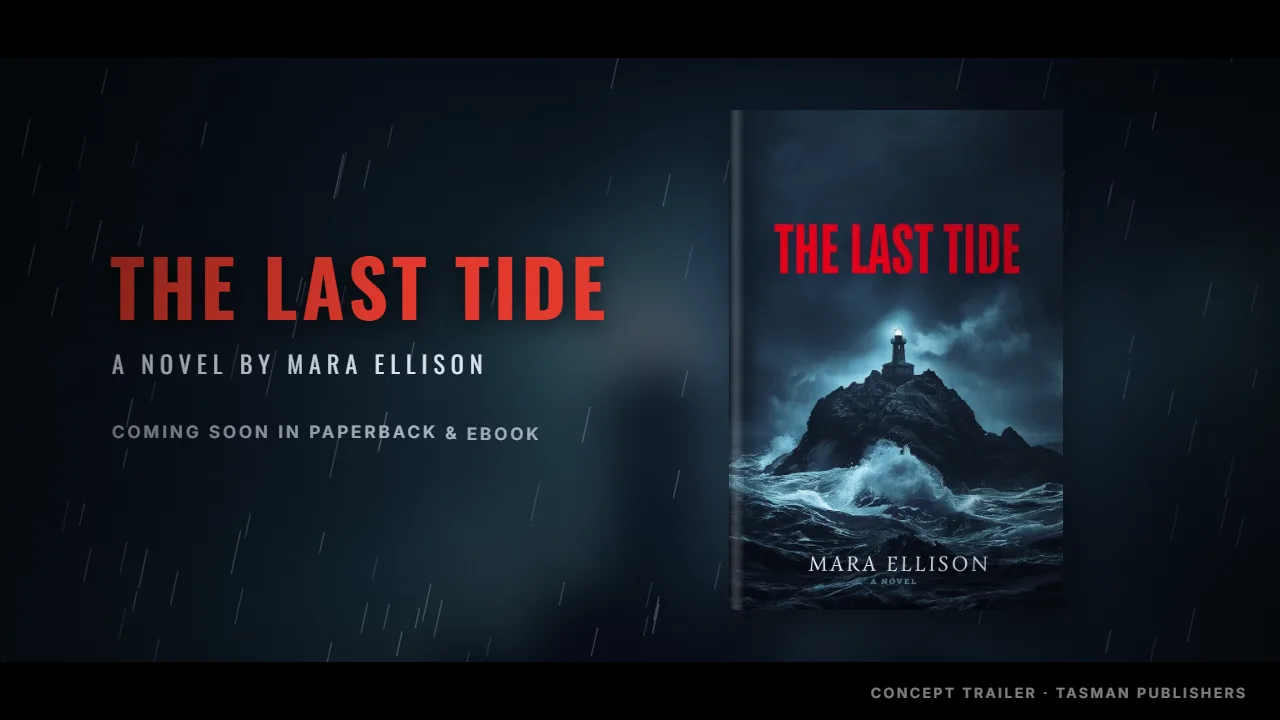 Book trailerWatch the sample
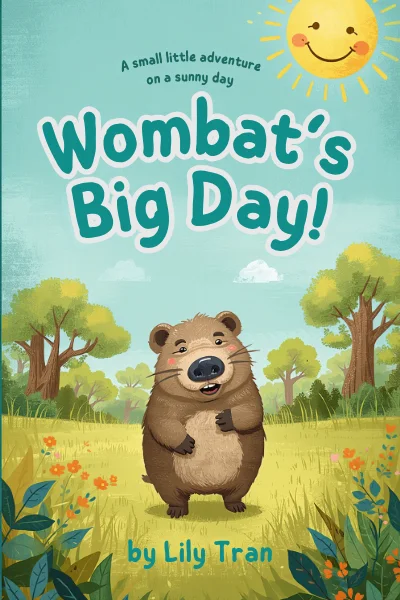
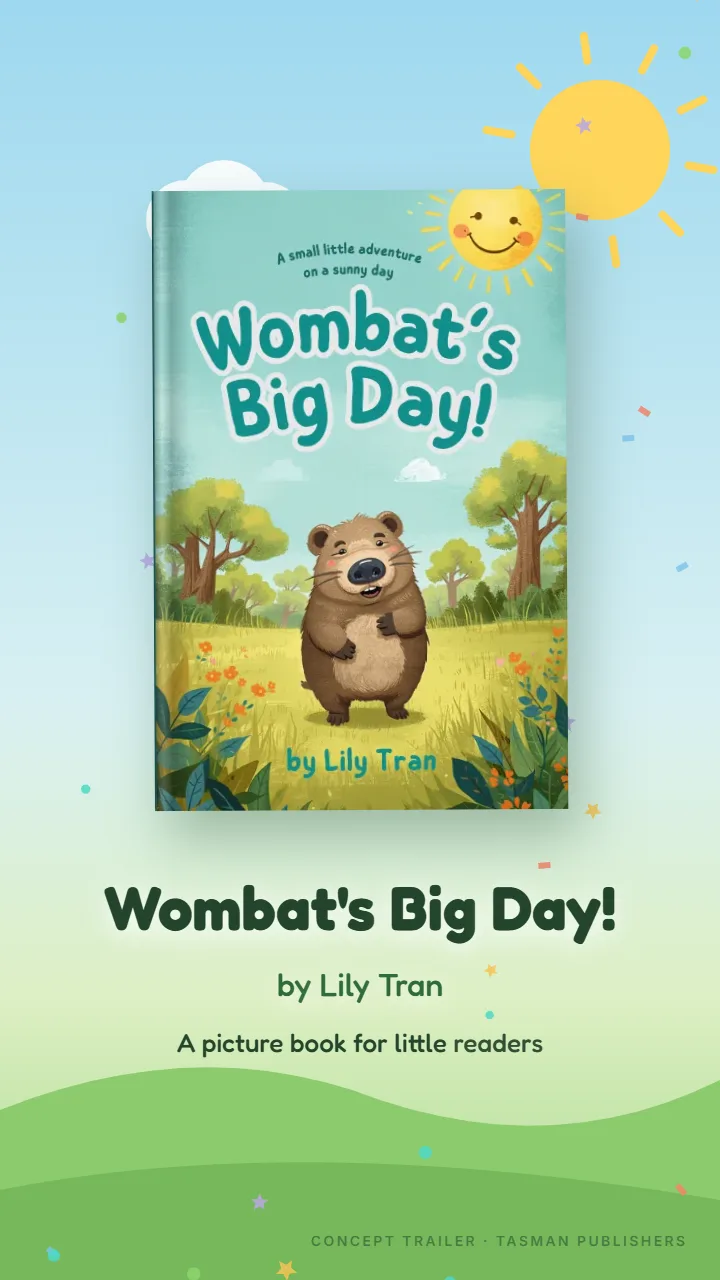
by Lily Tran
A 32-page picture book with original illustrations, published in hardcover and as a fixed-layout ebook.
Wombat woke up early.
Today was going to be a VERY big day.
He had a plan.
A very, very big plan.
Set for print and re-flowed for ebook. See formatting
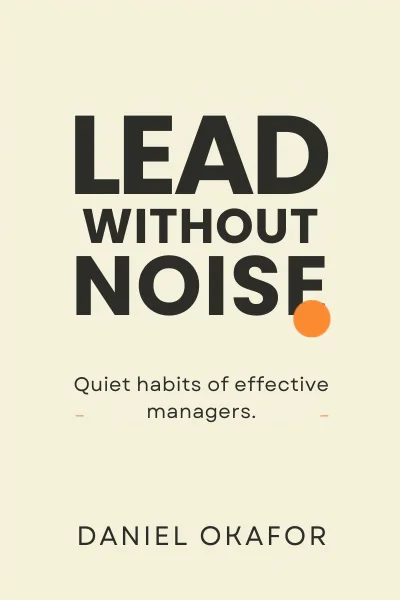
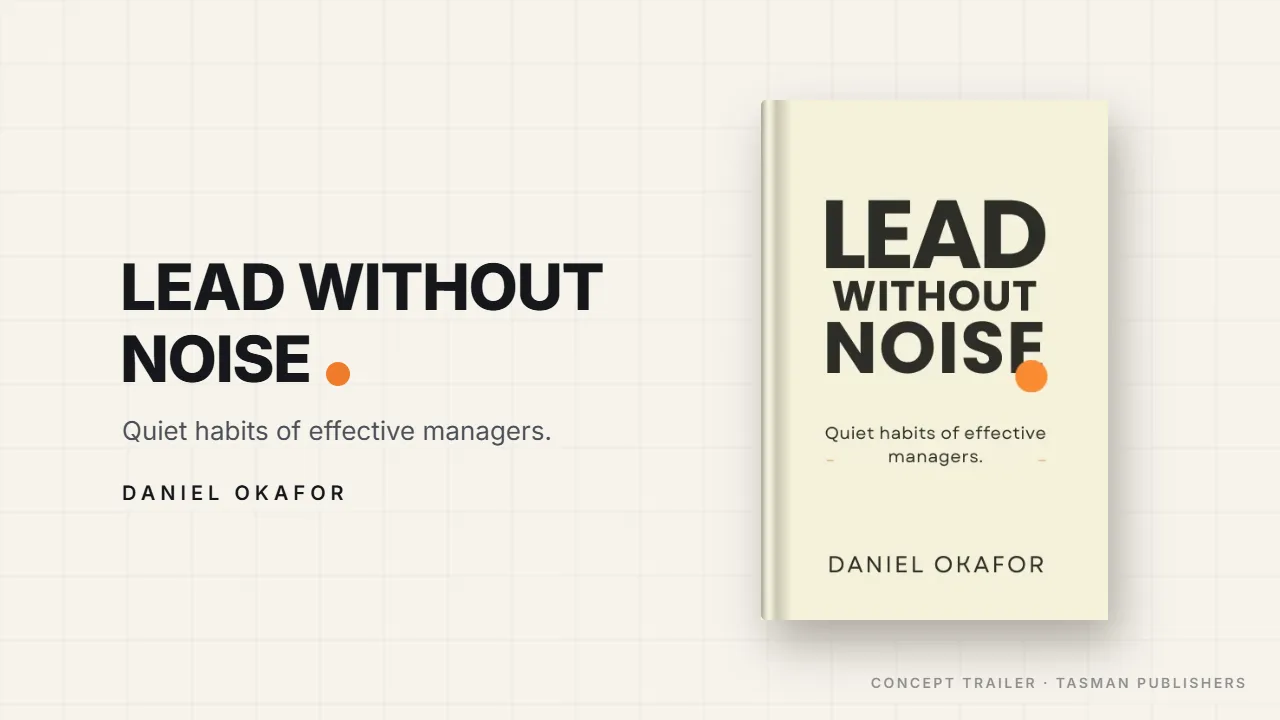
by Daniel Okafor
A business book built around the author’s speaking work, published in print, ebook and author-narrated audio.
3
Protect Focus
Why the calmest teams do fewer things, better
“Interruptions are the biggest meeting nobody ever scheduled.”
41
Protect Focus
The cost of switching
Every time a manager interrupts someone, the cost is not the thirty seconds the question takes. It is the twenty minutes it takes that person to find their way back into the work.
Calm teams are not less busy. They are more deliberate about when they are available. In practice that means three things:
At the end of the week, ask one question: what did you finish that you would not otherwise have finished? The answers are usually the best argument for doing it again.
Focus is not a perk. It is the raw material of every piece of work your team is proud of, and protecting it is one of the few jobs that only a manager can do.
42
Set for print and re-flowed for ebook. See formatting
Sample projects built for fictional books to show what a finished publishing project includes. The titles, authors and editions are not real.
Which path suits you depends on how much control you want, how fast you want to move, and what the book is.
Full creative control and the larger share of the revenue, with our production team doing the heavy lifting behind you.
We prepare and submit your manuscript to traditional publishers: proposal, sample chapters and a submission list.
Ebook and online editions, formatted properly for every reader and store, so the book is there the moment somebody wants it.
Illustrated, academic, technical or heavily designed books that a general process would flatten.
Most authors are weighing up three routes, and the differences that matter are who pays, who owns the book and who does the work. Here is the honest comparison, including where we do not fit.
| Traditional publisher | Doing it yourself | Author services (what we do) | |
|---|---|---|---|
| Who pays for production | The publisher | You, supplier by supplier | You, as one fixed quote |
| Who owns the copyright | You, but licensed to them for years | You | You |
| Royalty share | Typically a small percentage to you | All yours | All yours |
| Advance paid to you | Sometimes | No | No |
| Getting accepted | Selective, and slow | Not applicable | Not applicable |
| Creative control | Shared, and usually theirs | Entirely yours | Entirely yours |
| Who manages the work | The publisher | You | Us, with one named contact |
| Time to market | Often a year or more after signing | As fast as you can manage it | Driven by the stages your book needs |
| Bookshop & library reach | Strongest | Depends what you set up | Retail and library feeds set up for you |
If an advance matters to you, or you want the bookshop presence and prestige that comes with a publisher's list, then submitting is the right route and we will tell you so. We can prepare and submit the manuscript for you as a paid service, but acceptance is never guaranteed and nobody can promise it.
If you have time, a good eye and the patience to manage freelancers, briefs, file specs and retailer dashboards, you can publish a strong book yourself. Plenty of authors do. What they are really buying from us is project management, judgement and one accountable team.
Take the whole chain or only the parts your book still needs. Each one has its own page if you want the detail.
We set up ISBNs, barcodes and metadata for every edition, then list the book with the retailers and wholesalers that bookstores and libraries order through.
Publishing is not one job, it is a sequence, and a retailer will reject a title that is missing any link in it. This is the whole list, in the order it happens. If you have already done some of it, you pay for the rest and no more.
Most authors come to us with the first item done and the rest ahead of them. The point of a publishing project is that nobody has to remember which of these is outstanding: the schedule does.
The two that authors underestimate most are metadata and the print specification. Metadata is the title, subtitle, blurb, categories and keywords that decide whether a reader ever sees your book; the print specification is the trim size, spine width, bleed and colour profile that decide whether the printer accepts your files at all.
Royalties confuse more first-time authors than any other part of publishing, mostly because "royalty" means something different in each channel.
Ebook stores pay a percentage of your list price. Amazon currently pays either 70% or 35% depending on the price band you choose and the file size, and other stores sit in a similar range. You set the price, so you control which side of that line you are on.
Print works on a wholesale discount, not a royalty: the retailer buys at a discount off your list price, usually somewhere between 40% and 55%, and the printing cost comes out of what is left. That is why page count and trim size affect your earnings, not just your production bill.
Audiobook platforms pay a royalty per sale, and library platforms pay per loan or on a licence model. Both are worth having: library borrowing reaches readers who would never buy a first book by an unknown author.
The retailers pay you directly, into your own account. We are paid once, for the production work, and we take no percentage of anything your book earns afterwards, for the life of the book.
Retailer rates and terms are set by the platforms and do change. We will always show you the current numbers for your price point before you set a retail price.
Nobody can quote a real schedule before reading the manuscript, but the things that move the date are predictable. We give you a dated schedule once we know which of these apply to your book.
A dated schedule, a named contact, and your sign-off at every stage.
Tell us the idea. We sharpen the angle and check it against what your category is actually selling.
We read the whole manuscript and report on structure, quality and how well it lands with your reader.
An experienced editor works through structure, tone and syntax, with every change tracked.
Cover design, typeset interior and ebook files, proofread on the final pages before print.
ISBNs, metadata and distribution set up, and the book goes on sale to readers worldwide.
We are the production and distribution team, not the owner of your work. Nothing we do changes who holds the rights.
Most authors come to us part-way along. Take only what is left.
What authors ask before they choose a publishing partner.
Yes. You hold the copyright and the royalties, and your name is the author name. We are the production and distribution team, not the owner of your work.
Independent publishing gives you full creative control and the larger share of revenue, with our team doing the production. Traditional submission support prepares and submits your manuscript to publishers for a fee; acceptance is never guaranteed. Digital and specialised publishing cover ebook-only and heavily designed or technical books.
We list print and ebook editions with the major online retailers and wholesalers used by bookstores and libraries, including Amazon, Booktopia, Apple Books, Kobo and Google Play, plus library platforms.
We set up ISBNs, barcodes and the metadata for every edition, and register the title so bookstores and libraries can order it. If you already have your own ISBNs, we use those.
It depends on which stages your book needs. A manuscript that is already edited moves much faster than a first draft. You get a dated schedule at the start, with a named contact from first read to launch day.
Yes. Plenty of authors start with one format and add the others later. We set the files up so adding a paperback or an audiobook afterwards does not mean starting again.
Self-publishing means doing the production yourself and hiring freelancers as you go. An author services company like ours does the production for you as one project, with one contact, while you keep the rights and royalties a traditional publisher would normally take a share of. The difference is who manages the work, not who owns the book.
Yes. The book can be published under a pen name while the ISBN, the contracts and the royalty payments stay in your legal name. Your real name does not have to appear anywhere in the book.
The retailers pay you directly, on their own schedules, into the bank account you register with them. We are not in the payment chain and we take no percentage, so there is nothing to reconcile with us.
Australian publishers are required to deposit a copy of each published title with the National Library of Australia, and state libraries have their own requirements. We handle the lodgement as part of publishing, and New Zealand has an equivalent requirement we also take care of.
Yes. You can publish locally only, or list worldwide and print regionally so overseas buyers are not paying freight from Australia. We set the territories with you before the book goes on sale.
We use what you have. Send us the files and we will check the cover is print-ready at the right trim and spine width, and that the manuscript is genuinely finished. You only pay for the stages your book still needs.
Don't leave the manuscript sitting in a drawer. Send us the book, its genre and where it is up to, and we'll come back with a plan, a fixed quote and a dated schedule.
Work with an Adelaide-based author services team today.